Monday, July 8, 2013

Book Review: The Talent Code


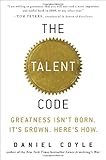
Daniel Coyle’s The Talent Code, explores the origin and construction of talent in humanity. Within the roughly 200 pages of text, Coyle explores a variety of modern talent hotbeds, Brazilian soccer players for example, in an effort to isolate the factors behind greatness. Coyle begins his exploration by starting with the biological facilities possessed by all humans—the building of neural pathways through the addition of myelin, a compound that serves as insulation and thus allows the neuron to fire more effectively and efficiently. In this section, a section that breaks scientific expertise down into basic terminology, Coyle allows the reader to understand how practice literally makes perfect through the extended construction of improved neural pathways.
Coyle then heads to the hotbeds themselves, observing the world’s best becoming the best. First providing an analytical breakdown of their deep practice, and then expanding upon this explanation, Coyle breaks down genius and greatness into the combination of deep practice, practice in which students engage in their field of study in an intense, driven manner, a manner that allows them to expand their abilities rapidly, and the ignition of said practice. Deep practice does involve and in fact thrives off of frequent and repeated error, error that is corrected and built upon by master coaches. Yet such practice requires a key component: desire. Desire comes through an area that Coyle terms as ignition, something that lights a fire among the youth and creates a desire to be great. For example Anna Kornikova’s early success in her tennis career ignited a desire for young, Russian girls to play professional tennis.
Lastly, Coyle explores those behind talent hotbeds and everyday talent growth: Master Coaches/Teachers. He provides extensive examples of these individuals in action—not only describing their methods and pedagogy, showing them in action, but also digging deeper, demonstrating how they became who they are. The skills of the master, what he terms as a Matrix of skills, are the product of years and years of practice, of trial and error, of undergoing the very same deep practice in the method of instruction that their pupils undergo in terms of their desired craft.
Overall, the text is a quick read, one that all teachers, coaches, and parents should invest in so that they can understand those they influence.
 

Tuesday, July 2, 2013

A Dynamic Warm-up for Running


One of the many concepts that runners must confront is warm-up. Warm-up’s are tricky: what do you do for a warm-up, how to you go about it, and what are you looking to get out of it. For years, many people simply stretched, then as research trended for a more active routine, they jogged a couple slow laps and then stretched. But, stretching will diminish your body’s ability to perform at a peak level for 30-40 minutes—not the goal of a warm-up—and it has been shown to be of no real consequence when it comes to injury prevention. Today, we now know that a dynamic, active routine is the best overall solution.

Thus we work with our runners and have them use the following lunge routine before their steady runs. These lunges warm the body up, work on movements in all planes of movement, engage the core and leg muscles to build strength, and in the end improve athleticism. We do a total of five lunge exercises, doing five reps per leg. Once five becomes easy, you can consider going to ten.

1.      Forward lunge:
a.       Step into a lunge forward. Be sure that you keep your knee above or behind the ankle to avoid putting a great deal of tension into the knee and risking injury.

Lateral Lunge
2.      Side/Lateral lunge:
a.       Step to the side, pushing your rear back a bit as you fall into the lunge. Be sure to keep the knee and ankle placement as described above. To do so, you may need to ensure that the center of gravity is slightly back.
3.      Back and to the side:
a.       Step backwards at a 45 degree angle into a lunge
 4.      Forward lunge as a twist
a.       Same movement as the forward lunge but with an added twist. Twist your torso, toward the forward leg as you step into the lunge.
5.      Backward lunge:
a.       Same form as a forward lunge except that you step back into it instead of stepping forward

See this video if you have questions. He has her do them in a different order, but it is the same thing

Outside of lunges, I warm-up with the following two exercise as well:

Ankle jumps: Stationary jumps where you jump from your toes, landing forefoot first and then kissing the heel to the ground. Complete around 20-30 to work on landing pattern for faster running and explosion.


100 Ups: Literally marching in pace slowly, this video will do it best , but be sure to tense the muscle in your support leg to practice support work. This is a form exercise that is great for warm-up. Complete anywhere from 25-50 with each leg.


Enjoy!

Tuesday, June 18, 2013

New Publication: The Unfulfilled List (Gravel A Literary Journal)

A quick post here. Gravel Magazine just released a piece of flash fiction/free verse poetry of mine that can be found here. The 50 word piece, a result of my recent effort to produce quality, single serving literature (discussed here), aims to explore the idea of lists, their meaning, and their endgame purpose.

For those who didn't click, see below:


The Unfulfilled List

Two Eggs,
Four Apples, green in color,
One bottle of cinnamon—ground,
Three bananas, overripe,
One promise,
Four dried, Turkish Apricots,
Three pineapple cores, moist,
One gallon of organic milk, free range,
Two pounds of brown rice,
Four mandarin oranges,
Conceits collected,
Wet paper torn in half,
Smudged ink.

Monday, June 10, 2013

Personal Footwear Recommendation Service


Skora Phase in action.
As a featured Optimal Runner and guest blogger for OptimalRun.com, they recently invited me to Personal Footwear Recommendation Service. This service, which can be found by clicking the title above, takes you to an easy to follow, easy to complete form in which they ask you a variety of questions about your status as a runner, your style of running, the shoes you wear, what you like about them, what you don’t, the events you are training for, etc. These questions, which will take you about five to ten minutes to complete (maybe less, I filled mine out on my phone), allow you to create the local running store experience from the comforts of your couch, car, office, boat, or in my case sitting on the beach.
try out their new

Yet, this form is far more complete than a local running store, where a few questions are asked, a treadmill is used, and an employee (typically a strong runner himself) quickly leads you into one or two models he prefers. Optimal Run takes this process a step farther—they examine your answers, pull from their stocks, and present you with a three minute video (in my case) that not only describes in detail the models they have pulled for you, but also why these models fit your profile. They matched my preferences (less shoe, built in tongue, wide toe box) with models that I had yet to try, but might fit me better, both of which seem interesting to me. What adds to the intrigue is that they know I am an Ambassador for Skora Running and thus, instead of taking the easy way out as often found in the local store, they searched for other options in order to expand my horizons.
Screenshot of the Video

Too often you walk into a store, say you wear Altra, and well are handed another pair of Altra. Not to
say Altra doesn’t make a great shoe, the One is in my rotation, just that sometimes these shoes aren’t working for you and an attentive salesman, in this case the form you provide, will find said information and lead you into a more preferable option. That said, Optimal Run often runs weekly coupon specials, posting them on twitter, and if available, they will give you a code with your recommendations. They have free shipping and no questions on returns for a total of 40 days. I have undergone the purchasing process, buying a pair of shoes for a friend, and also gone through the return process in order to understand the ins and outs. They ship priority in all directions, maintain a high level of communication and work to create a satisfied customer.

Tuesday, May 28, 2013

Adjusting Easy Training: Running the Right Kind of Easy

One thing runners often err on is their easy pace. They run a great workout, average 7:00 pace per mile, and then come back the next day and run 9:00 minute miles in recovery. This type of training, something I would never condone as a coach (click here for more information on coaching).


http://www.avantlink.com/click.php?tt=cl&mi=12329&pw=162779&url=http%3A%2F%2Fskorarunning.com%2Fcatalogsearch%2Fresult%2F%3Faj%3Dct%26gender%3D44%26q%3Dfit%26acc%3D6f4922f45568161a8cdf4ad2299f6d23%23aj%3Dct%26gender%3D44%2C43%26q%3Dfit
So why is the establishment of such pacing essential? Why can’t one just go out and run without giving the pace a thought? The fact of the matter is, most articles that cover the plateau effect, where a runner sees diminishing growth in their performance and fitness, comes from the fact that the spend too much time running too easy. They are capable of running at 8:30 pace for a long, long time, but because 8:30 requires an alteration of their comfort zone, they run 9:30 pace and then complain that their 5k time will not improve. This is not to say that running easy is not recommended, in fact it is the majority of your weekly miles, but what is important is to understand that your easy pace, the pace you run long runs in, warm-ups, cool downs, and steady runs in, needs to be at a level that also creates and promotes fitness.

Skora Bases
With this in mind, consider converting your easy pace over to something that meets the above criteria, something that is not easy but easy enough not to overstress the system. Our legs need to incur stress during these runs, but not workout stress. I place runners all over on E runs based on their goals and adjust this pace as they improve. Currently, I have an easy pace of 8:01 per mile. Not too fast, but most definitely not slow (depending on the runner that is, I make all of these judgmental statements about myself). This pace will elevate my performance in a multitude of distances and ultimately allow for a faster easy pace.

Now I have a per run goal, a need for all runners, and a way to avoid junk miles. This pace is to be replicated over the course of runs, whether I feel fresh, fast, and thus able to go, or if I am beat up from a quality workout. This is to apply a proper amount of stress to my system, to force my system to adapt, and in doing so, force my overall level of fitness to increase. Off course, I have to work into it. Some days this effort comes easy, others I struggle, but my goal is to hit this mark more often than not a per run average (regular runs not workouts). As a runner adapts and becomes more serious, such training should be taken into account.